
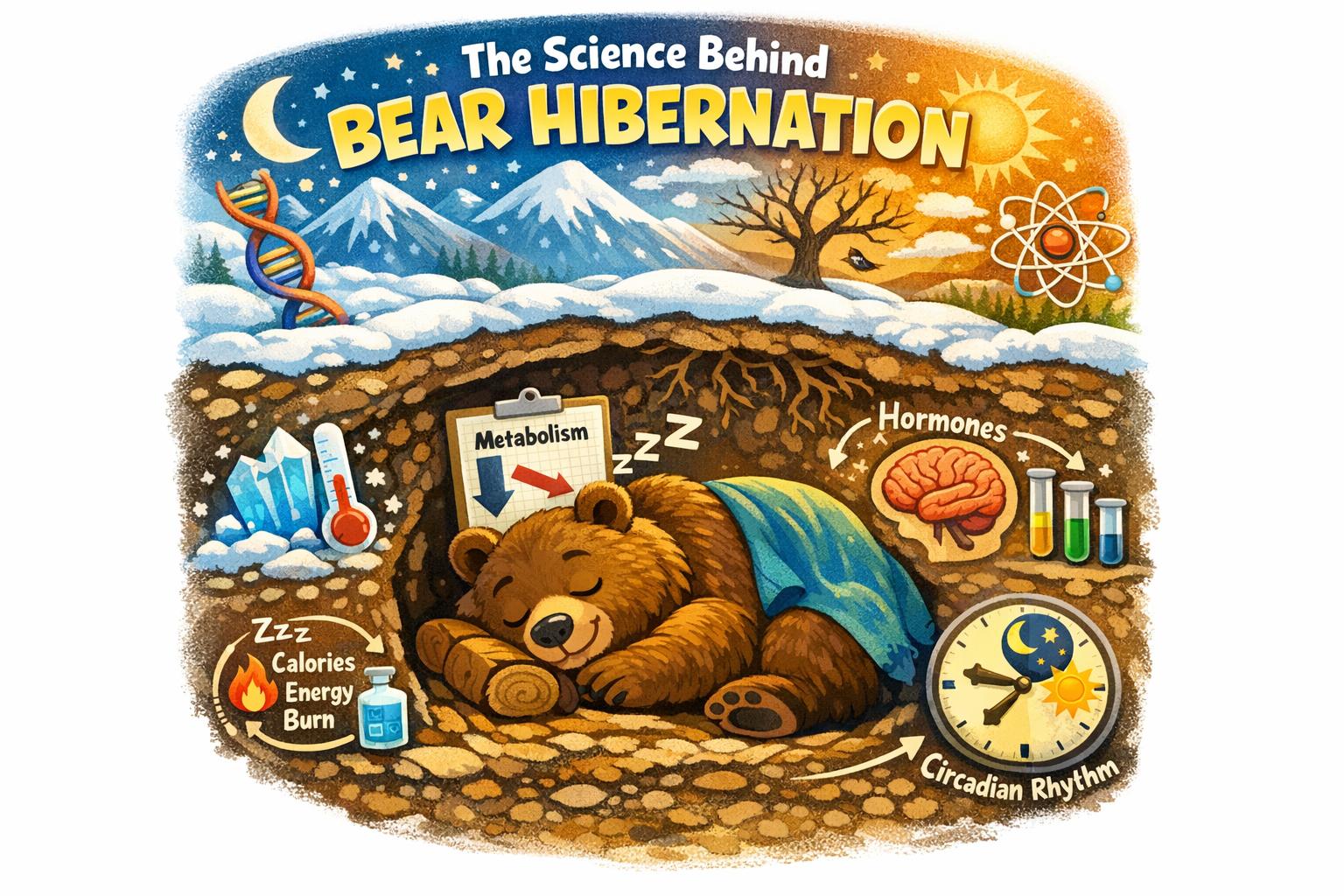
Introduction to Bear Hibernation
Bear hibernation is one of the most studied seasonal adaptations in large mammals. Unlike smaller hibernators such as ground squirrels, bears enter a physiological state that differs significantly from what is traditionally defined as true hibernation. The science behind bear hibernation reveals complex metabolic regulation, cardiovascular adjustment, and behavioral adaptation that allow bears to survive for months without eating, drinking, urinating, or defecating. Understanding this process requires examining ecology, endocrinology, and evolutionary biology.
Is Bear Hibernation “True” Hibernation?
In biological terms, hibernation is characterized by drastic reductions in body temperature and metabolic rate. Small mammals such as marmots may reduce their body temperature to near freezing. Bears, however, maintain a relatively high body temperature during winter dormancy. A black bear’s normal active temperature of approximately 37–38°C (98–100°F) may only drop to about 30–33°C (86–91°F).
This distinction has led researchers to classify bears as super hibernators rather than classic deep hibernators. Despite the modest drop in temperature, bears experience profound metabolic suppression. Studies from the National Park Service show that a bear’s metabolic rate may decrease by 50–75%, enabling it to conserve energy over several months.
Seasonal Triggers and Preparation
Hibernation is not a spontaneous event triggered by snowfall. It is regulated by environmental cues such as photoperiod (day length), temperature changes, and food availability. In late summer and autumn, bears enter a phase known as hyperphagia, during which they consume large quantities of food to accumulate fat reserves. During this period, a bear may consume up to 20,000 calories per day.
The primary energy source stored is white adipose tissue. This fat becomes the bear’s sole energy supply throughout winter. Hormonal changes, particularly involving insulin sensitivity and leptin regulation, promote fat storage and metabolic adjustments. Research published through institutions such as the U.S. Forest Service Research & Development highlights how bears become temporarily insulin resistant before hibernation, allowing efficient fat accumulation without pathological effects seen in humans.
Metabolic Suppression and Energy Use
During hibernation, the bear’s physiology shifts into an energy conservation mode. Heart rate declines dramatically, from 40–70 beats per minute to as low as 8–10 beats per minute. Some studies have recorded pauses between heartbeats lasting up to 20 seconds. Respiration slows as well, with bears taking only one or two breaths per minute.
Fat metabolism becomes the central biochemical pathway. Triglycerides stored in adipose tissue are broken down into fatty acids and glycerol. These compounds fuel organs and tissues over the winter months. Importantly, bears rely primarily on fat rather than muscle protein, preserving lean body mass despite prolonged inactivity.
Unlike many mammals experiencing starvation, bears do not suffer severe muscle atrophy. Their bodies recycle nitrogen waste products, converting urea into amino acids. This internal nitrogen recycling minimizes muscle breakdown and prevents toxic accumulation. The process has attracted biomedical interest for applications related to muscle wasting and kidney disease.
Water Balance and Waste Management
One of the most remarkable aspects of bear hibernation is the absence of urination and defecation. While fasting humans rapidly accumulate toxic waste products, hibernating bears maintain stable internal chemistry. Urea, normally excreted through urine, is recycled through microbial and hepatic pathways.
Additionally, fat metabolism generates metabolic water as a byproduct. This internal water production compensates for the lack of drinking. The colon forms a fecal plug composed of hair, plant material, and epithelial cells early in hibernation, but active digestion ceases.
Den Selection and Microclimate
Bears typically select dens that provide insulation and protection from environmental extremes. Black bears may use hollow trees, rock crevices, or excavated ground dens. Grizzly bears often dig dens into hillsides with southern exposure to moderate internal temperatures.
The den environment stabilizes temperature and reduces wind exposure. Snow accumulation can further insulate the den, maintaining a relatively consistent microclimate. However, it is important to note that bears can awaken and leave the den if disturbed. Their moderate body temperature enables more rapid arousal compared to small hibernators.
Reproduction During Hibernation
One of the most biologically significant aspects of bear hibernation is reproductive timing. Mating typically occurs in late spring or early summer, but bears exhibit delayed implantation. The fertilized embryo remains in a suspended state until autumn. Only if the female has accumulated sufficient fat reserves will implantation proceed.
Cubs are born during winter dormancy, usually in January or February. Newborn cubs are extremely small, typically weighing less than one pound. They nurse while the mother remains in the den. Lactation occurs despite the mother’s continued fasting, supported entirely by stored fat. By the time the family leaves the den in spring, cubs may weigh 5–10 pounds.
Immune Function and Disease Resistance
Long-term inactivity in humans is associated with bone loss, suppressed immunity, and increased infection risk. Bears, however, maintain bone density and immune competence during hibernation. Osteoclast and osteoblast activity remain balanced, preventing osteoporosis. Researchers studying bear physiology have identified specific gene expression changes that protect skeletal integrity.
The immune system also adapts. Certain inflammatory pathways are selectively downregulated, while essential immune defenses remain available. This selective modulation minimizes energy expenditure while preserving protection against pathogens.
Cardiovascular Adaptations
Bears exhibit profound cardiovascular plasticity. Reduced heart rate is accompanied by maintained cardiac strength. Unlike humans experiencing prolonged bed rest, bears do not develop significant clotting issues or cardiovascular deterioration.
Collagen structure and arterial elasticity appear preserved. Studies using implanted cardiac monitors have demonstrated that bears can rapidly elevate heart rate when disturbed, then return to bradycardia. This flexibility indicates that hibernation involves controlled modulation rather than systemic shutdown.
Neurological and Behavioral Features
Although hibernating bears appear dormant, electroencephalogram (EEG) readings reveal cyclical sleep patterns resembling a mix of deep sleep and metabolic suppression. Bears can respond to sound or movement and may change position within the den.
This semi-dormant state enables maternal responsiveness. A mother bear can awaken sufficiently to nurse or reposition her cubs. The neurological mechanisms coordinating reduced metabolic demand with maintained sensory responsiveness remain an active field of study.
Species Differences
Not all bear species hibernate in the same way. American black bears and brown bears undergo prolonged winter dormancy lasting up to seven months in northern climates. Polar bears do not hibernate in the traditional sense, though pregnant females den during winter. In contrast, sloth bears and sun bears in tropical environments may not hibernate at all, as food remains available year-round.
These differences reflect evolutionary adaptation to local ecological pressures. Hibernation emerges as a flexible strategy aligned with seasonal food scarcity rather than a universal trait.
Climate Change and Hibernation Patterns
Climate variability increasingly influences denning behavior. Warmer autumns can delay den entry, while earlier springs may prompt premature emergence. Shifts in food availability, particularly mast crops such as acorns, also influence timing.
Research published through organizations like the U.S. Geological Survey indicates that altered denning duration may affect cub survival and energy balance. As ecosystems change, the physiological limits and plasticity of bear hibernation are becoming more relevant to conservation biology.
Biomedical Implications
The physiological traits of hibernating bears have direct human medical implications. Muscle preservation during inactivity provides insight for treating muscle atrophy. Nitrogen recycling and kidney function during months without urination suggest potential pathways for managing renal disease. Bone preservation mechanisms could inform osteoporosis treatment.
Space agencies have also expressed interest in hibernation research as a model for long-duration space travel. Understanding how large mammals safely reduce metabolic rate while protecting organ systems may contribute to future biomedical innovation.
Conclusion
Bear hibernation is a coordinated physiological strategy involving metabolic suppression, cardiovascular adaptation, nitrogen recycling, immune modulation, and reproductive synchronization. It differs from classic small-mammal hibernation yet achieves the same functional goal: survival during prolonged periods of environmental scarcity.
Far from simple winter sleep, hibernation represents a precisely regulated biological state shaped by millions of years of evolution. Ongoing research continues to reveal how bears manage to endure months without food or water while maintaining muscle, bone, organ function, and reproductive success. The science behind bear hibernation not only deepens our understanding of wildlife ecology but also provides valuable models for human health and medicine.