
The Central Role of Smell in a Bear’s Life
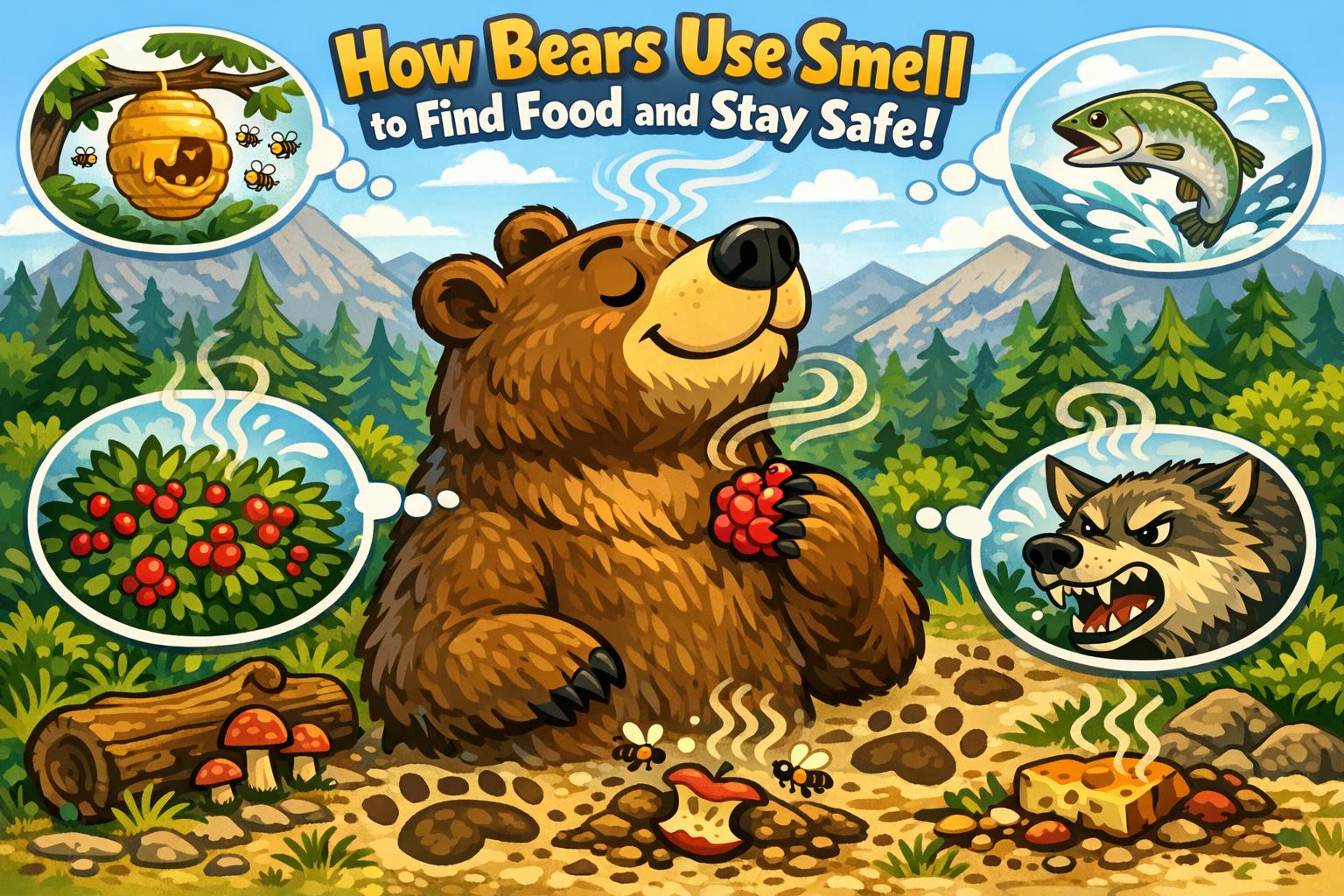
Bears rely on their sense of smell more than any other sense. While they can see and hear reasonably well, it is their olfactory system that shapes how they move through the landscape, find food, identify threats, and communicate with other bears. In many species, smell determines daily movements and seasonal patterns, especially in environments where food is scattered or hidden.
Research on bear olfaction suggests that bears may have one of the most acute senses of smell among terrestrial mammals. According to information provided by the U.S. National Park Service, a bear’s sense of smell is far more developed than that of humans and even surpasses that of bloodhounds in several measures. This extraordinary capacity is not simply an interesting biological trait; it is fundamental to survival.
Anatomy of the Bear’s Olfactory System
The effectiveness of a bear’s sense of smell begins with anatomy. Bears have a large nasal cavity filled with complex folds of tissue called turbinates. These structures increase the surface area available for detecting airborne molecules. Within this tissue are millions of olfactory receptor cells designed to capture even faint traces of scent.
The part of the brain dedicated to interpreting smell, the olfactory bulb, is proportionally much larger in bears than in humans. This expanded processing area enables fine discrimination between scents. A bear can distinguish between food odors, the scent of a rival, or the smell of a human camp, even when these are carried over long distances.
Odor molecules enter the nose as a bear breathes or actively sniffs. Bears often raise their heads and move them slowly from side to side, sampling air currents. This behavior increases the chance of detecting faint scent trails carried by wind.
Locating Food Across Large Landscapes
Seasonal Feeding Patterns
Bears are opportunistic omnivores, and their diet shifts dramatically through the year. In spring, they may search for emerging vegetation, winter-killed carcasses, or newborn ungulates. During summer, berries, insects, and fish become key resources. In autumn, many bear species enter a period of hyperphagia, consuming large quantities of food in preparation for winter dormancy.
Smell is central in each of these stages. A bear can detect the odor of a carcass from considerable distances, depending on wind direction and terrain. They can also locate buried food, including small mammals or cached carcasses, by detecting scent through soil.
Detecting Plant Foods
Although berries and nuts do not emit odors as strong as carrion, ripe fruit produces volatile organic compounds that bears can detect. In dense forest habitats, where visibility is limited, scent cues help bears determine which patches are ripe and worth investigating.
Bears also remember productive feeding areas. Their memory works alongside smell. A bear may revisit a site known for abundant berries and then use scent to confirm ripeness and current availability.
Fishing and Aquatic Resources
In regions such as coastal Alaska, brown bears gather at salmon streams. While sight plays an important role in catching fish, smell helps bears determine when salmon are present in adjacent waters. The scent of decomposing fish along riverbanks also attracts bears, providing important calories during critical feeding periods.
The interaction between aquatic and terrestrial scents forms part of a larger ecological network. Studies published in wildlife biology journals show that bears often follow odor plumes along river corridors, moving upstream as salmon runs progress.
Finding Carrion and Prey
Carrion detection highlights the range of a bear’s olfactory ability. When an animal dies, decomposition releases strong-smelling chemicals such as cadaverine and putrescine. These compounds travel on air currents and can persist for long periods.
Bears frequently use these odor trails to locate winter-killed elk, deer, or moose. In open tundra or mountainous regions, wind can carry scent across valleys. A bear positioned downwind may detect food hidden from view by terrain.
When actively hunting, such as when a polar bear searches for seal breathing holes, smell also plays a decisive role. Polar bears can detect seals beneath snow and ice by identifying subtle scent cues rising through tiny openings. The conservation challenges facing polar bears, discussed by organizations like the World Wildlife Fund, highlight how dependent these animals are on frozen habitats that permit this scent-based hunting strategy.
Smell and Food Competition
Smell not only leads bears to food; it informs them about competition. When approaching a carcass, a bear can often determine whether another bear has already claimed it. Scent marks left in the area, including urine and glandular secretions, communicate presence and possibly dominance.
If a dominant individual is nearby, a subordinate bear may choose to avoid direct confrontation. In this way, smell reduces unnecessary conflict and conserves energy. Competition for high-calorie food is intense, particularly before winter, and avoiding injury is crucial for survival.
Using Smell to Stay Safe
Detecting Predators and Threats
Adult bears have few natural predators, though cubs are vulnerable to wolves, cougars, and even other bears. A mother bear relies heavily on smell to assess whether danger is near. By interpreting scent traces, she can detect predators that may not yet be visible or audible.
Human presence is also often identified by smell before visual contact. Campfire smoke, food odors, fuel, and manufactured materials all carry distinct scent signatures. Bears frequently investigate these unfamiliar smells, which can lead to conflict if human food is improperly stored.
Management agencies emphasize proper food storage in bear country because odor discipline directly affects bear behavior. Once a bear associates human scent with calories, it may repeatedly seek out campsites or residential areas.
Avoiding Other Bears
Bears are generally solitary outside of mating season and family groups. Encounters between unfamiliar adults can result in aggression. Scent marking allows individuals to advertise territory use and reproductive status.
Bears rub against trees, bite bark, and leave scent from glands located in their feet and skin. These chemical messages can persist, informing other bears that an area is occupied. By interpreting these signals, a bear can decide whether to proceed or avoid confrontation.
Chemical Communication in Reproduction
During mating season, scent becomes even more significant. Female bears in estrus release pheromones that males detect from considerable distances. Males may travel long distances in response to these chemical cues.
Chemical communication reduces the need for constant physical searching. Instead of relying purely on chance encounters, bears interpret reproductive signals embedded in the environment. This system increases mating opportunities while limiting unnecessary movement.
Spatial Memory and Olfactory Mapping
Bears appear to integrate scent detection with spatial memory. Over time, they build a mental map of their home range, linking certain odors to geographic features. For example, the scent of a particular meadow in late summer may signal a berry crop.
This integration allows efficient foraging. A bear does not wander randomly; it follows shifting scent gradients, remembers productive areas, and anticipates seasonal changes. GPS collar studies conducted by wildlife biologists demonstrate that bears often travel directly to food sources when they become available, suggesting prior knowledge reinforced by current olfactory confirmation.
Smell in Different Bear Species
Black Bears
American black bears inhabit forests, swamps, and mountains across North America. Dense vegetation often limits visibility, making smell especially critical. Black bears frequently stand upright to sample scents carried by wind above the understory.
Brown and Grizzly Bears
Brown bears occupy diverse habitats from coastal zones to interior mountains. In open tundra and alpine regions, wind plays a major role in carrying scent. Grizzlies, a North American subspecies, are known to approach carcasses cautiously, circling downwind to gather olfactory information before moving closer.
Polar Bears
Polar bears depend perhaps most dramatically on smell. Living in a largely white, low-contrast environment, they locate seals primarily through scent. Their long-range detection abilities allow them to traverse sea ice efficiently in search of breathing holes or dens.
Human Activity and Olfactory Disruption
Modern landscapes present new scent challenges. Industrial odors, vehicle emissions, landfills, and agricultural operations introduce strong artificial smells into bear habitats. These odors can confuse natural behavior or attract bears to unnatural food sources.
Garbage is particularly problematic. Bears are highly responsive to high-calorie food odors, and poorly managed waste can draw them into close contact with humans. Wildlife agencies recommend bear-resistant containers and strict food storage guidelines in parks and residential areas near bear habitat.
Habituation to human-related odors can reduce a bear’s natural avoidance behavior. Once food-conditioning occurs, it often requires intervention by wildlife managers.
The Limits and Adaptability of Smell
Although powerful, a bear’s sense of smell is influenced by wind direction, humidity, temperature, and terrain. Cool, moist air tends to hold scent close to the ground, making detection easier. Strong winds can disperse scent unevenly, creating complex odor plumes that require careful tracking.
Bears demonstrate adaptive behavior when following scent trails. They may zigzag to relocate a lost odor stream or pause to raise their heads and test shifting air currents. This deliberate sampling behavior illustrates how actively smell is used, rather than functioning passively.
Implications for Bear Conservation
Understanding the central role of smell has practical applications in conservation. Wildlife managers use scent lures in research to attract bears to hair traps for DNA sampling. Conversely, they attempt to eliminate attractants in human settlements to discourage conflict.
In areas where bears and humans overlap, education about scent control is essential. Simple measures such as sealing food, cleaning cooking areas, and storing garbage properly can prevent dangerous encounters.
Habitat preservation also supports natural scent-based behavior. When landscapes are fragmented, bears may be forced to cross roads or enter developed areas while following food odors. Maintaining connected habitat corridors reduces these risks.
Conclusion
For bears, smell is not a secondary sense but the primary channel through which the world is interpreted. It guides them to berries in thick forests, carcasses across valleys, salmon-rich rivers, and seals beneath Arctic ice. It helps mothers protect cubs, enables adults to avoid unnecessary conflict, and facilitates reproduction through chemical communication.
The effectiveness of this sense arises from specialized anatomy, a highly developed brain structure for processing odor, and behaviors adapted to tracking scent under variable environmental conditions. From daily foraging to long-distance seasonal movement, olfaction shapes bear ecology.
Appreciating how bears use smell also clarifies why human scent and food odors so readily influence their behavior. Responsible management of these odors is essential for reducing conflict and supporting long-term coexistence.
In the life of a bear, to smell is to navigate, to feed, to communicate, and ultimately, to survive.