
Essential Clothing and Footwear
When embarking on a bear-watching adventure, appropriate clothing and footwear should be at the top of your packing list. It is crucial to dress in layers, as weather conditions can vary significantly.
Base Layer: Opt for moisture-wicking materials like merino wool or synthetic fibers that keep you dry. Avoid cotton as it retains moisture.
Middle Layer: A fleece or insulated jacket will provide warmth. Ensure it allows for easy mobility.
Outer Layer: A waterproof and windproof jacket and pants are essential in case of rain or snow. Look for breathable fabrics to prevent overheating.
Footwear: Choose sturdy hiking boots with good ankle support and waterproof features. You may face uneven terrain, so footwear that offers traction is important. Don’t forget to bring wool or synthetic socks to keep your feet comfortable and dry.
Field Equipment
Equipping yourself with the right field gear is vital to ensure both safety and a successful bear-watching experience.
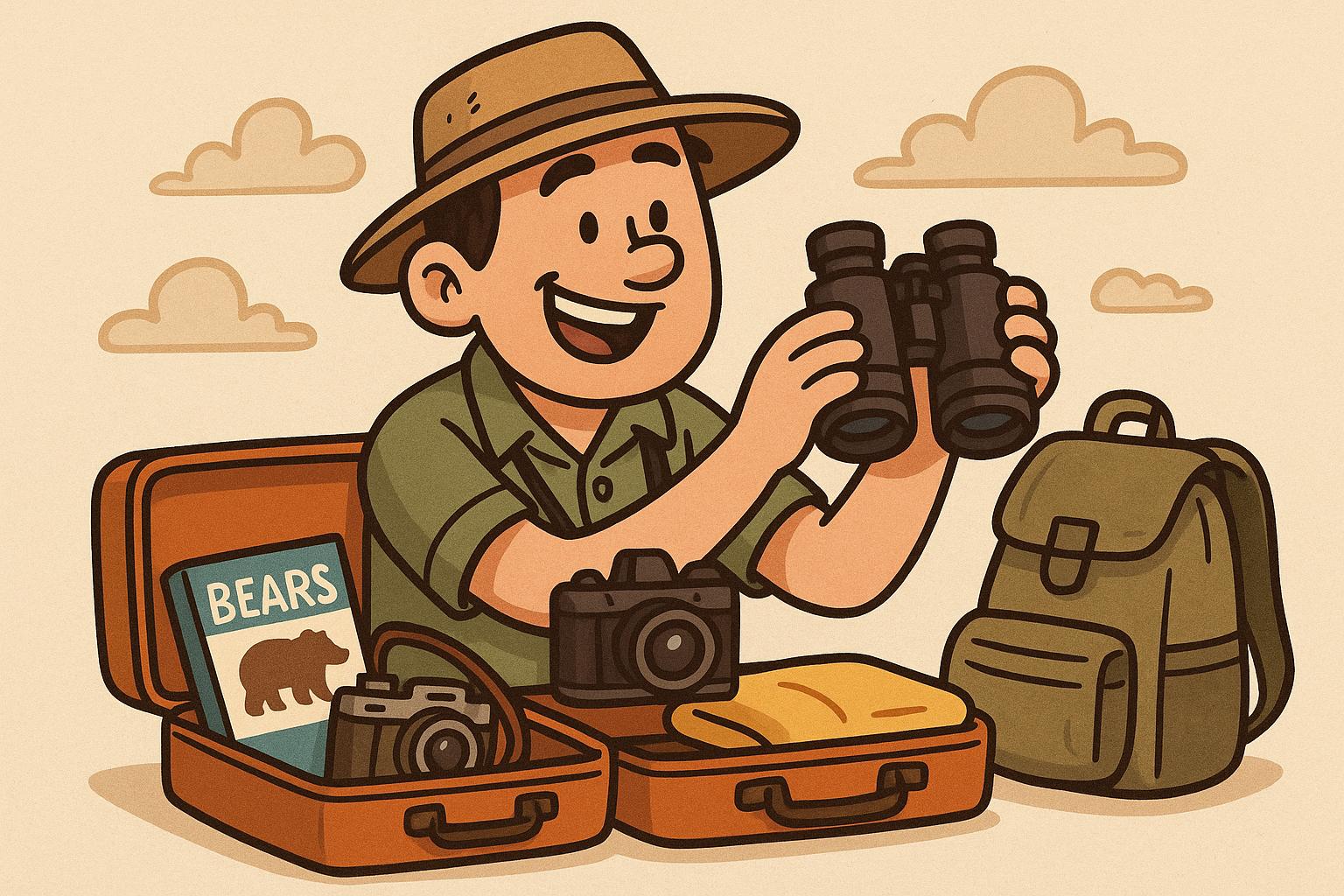
Binoculars: A quality pair of binoculars with at least 8×42 magnification will allow you to observe bears from a safe distance without disturbing them.
Camera: Consider a camera with a good zoom lens to capture distant wildlife. A phone with a high-quality camera can also suffice if coupled with a clip-on telephoto lens.
GPS and Maps: A GPS device or a smartphone app with offline maps can be invaluable, especially in areas with limited cell service. Always carry a physical map as a backup.
Camping and Safety Gear
If your trip includes camping, certain items are vital for your safety and comfort.
Bear Spray: Familiarize yourself with how to use bear spray and keep it accessible. It’s a crucial safety tool for deterring aggressive bears when used correctly.
Bear-Proof Containers: Use these for storing food and scented items to prevent attracting bears to your campsite.
First Aid Kit: Carry a comprehensive first aid kit that includes supplies for common injuries and emergencies you might encounter in the wilderness.
Portable Shelter: A lightweight tent or a durable tarp can offer protection from the elements. Ensure it is built to withstand potential extreme weather conditions.
Food and Hydration
Being adequately fed and hydrated during your bear-watching trip is important for energy and endurance.
Non-Perishable Food: Choose high-energy and easy-to-prepare foods like nuts, dried fruits, energy bars, and dehydrated meals.
Water Filtration: A portable water filter or purification tablets will enable you to safely utilize natural water sources. Ensure you have a reliable water bottle to carry enough water for your needs.
Additional Resources
For further reading and detailed information on bear safety and watching:
Visit the National Park Service’s page on Bear Safety
Learn about bear habitats through WWF’s Bear Information